Risk and ongoing monitoring
The whole relationship in view.
Every review tracked.
One year. Five years.
Tracked on every client.
AMLR expects monitoring across the whole relationship and fixed limits on how long client information can go without an update. It also expects a closer look at complex transactions, country risk, PEPs and sanctions. First AML links every matter to one client profile and enforces each jurisdiction's rules for every trigger. A review only counts when client information is updated.
Captures purpose and expected activity at intake.
Each matter’s risk assessment records the economic rationale, expected activity, who is paying and where funds are going. Where rules require it, source of funds and wealth evidence comes through the secure form, so when a later transaction is reviewed, the file shows what the client said to expect.
Checks every new matter against the whole relationship.
AMLR requires each transaction to fit what the firm knows about the client, its business and its risk. For law and accountancy firms, that check happens as each new instruction arrives. Every new matter opens a risk assessment on the client’s existing profile, with its earlier matters across offices in view. Work that doesn’t fit raises the risk and the office’s rules decide who signs it off.
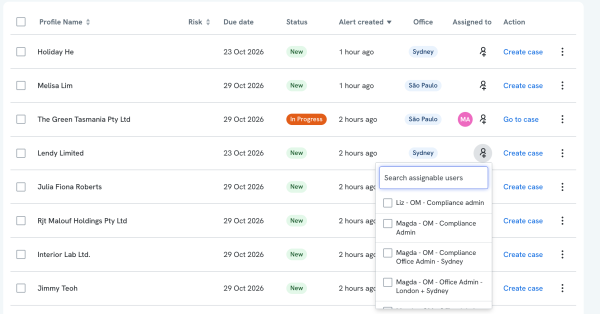
Keeps every client within AMLR’s review limits.
Rules set each client’s review date by risk, within the limits that apply to the office: one year under enhanced measures, five years otherwise. Changes to ownership, directors or status bring the date forward. The compliance team can also bring it forward when a matter team learns something new. The date only moves when client information is updated.

Records a defensible view of complex work.
AMLR requires the origin, destination and purpose of complex or unusual transactions to be examined. Firms whose everyday work is complex need to show why a transaction fits the client. First AML records it with:
- the firm’s definition of complex, built into the matter risk assessment
- follow-up questions on origin, destination and purpose when the definition applies
- evidence requested from the client through the secure form
- the analyst’s conclusion and any approval kept on the case
An acquisition funded through three jurisdictions is routine for an M&A team. The file still shows where the money came from, where it went and why it was judged consistent with the client.
Country risk
AMLR separates significant strategic deficiencies, compliance weaknesses and specific threats, and each carries its own measures. First AML holds a rule for each tier, so a client connected to a country flagged for weaknesses gets that country’s measures, not the full EDD set.
PEPs
AMLR adds heads of regional and local authorities with 50,000 or more inhabitants, qualifying party roles and the siblings of the most senior office holders. First AML screens for them, and each office’s rules set the treatment. At EU offices, every confirmed PEP needs senior approval, source of wealth and closer monitoring.
Sanctions
AMLR makes sanctions checks part of CDD, including on owners and controllers, with regular rechecking. Rules set who is screened against UK, EU and UN lists, including owners and directors, with daily rechecks. A hit shows every live matter it affects.
Frequently asked questions
How does First AML apply UK and EU monitoring rules to the same client?
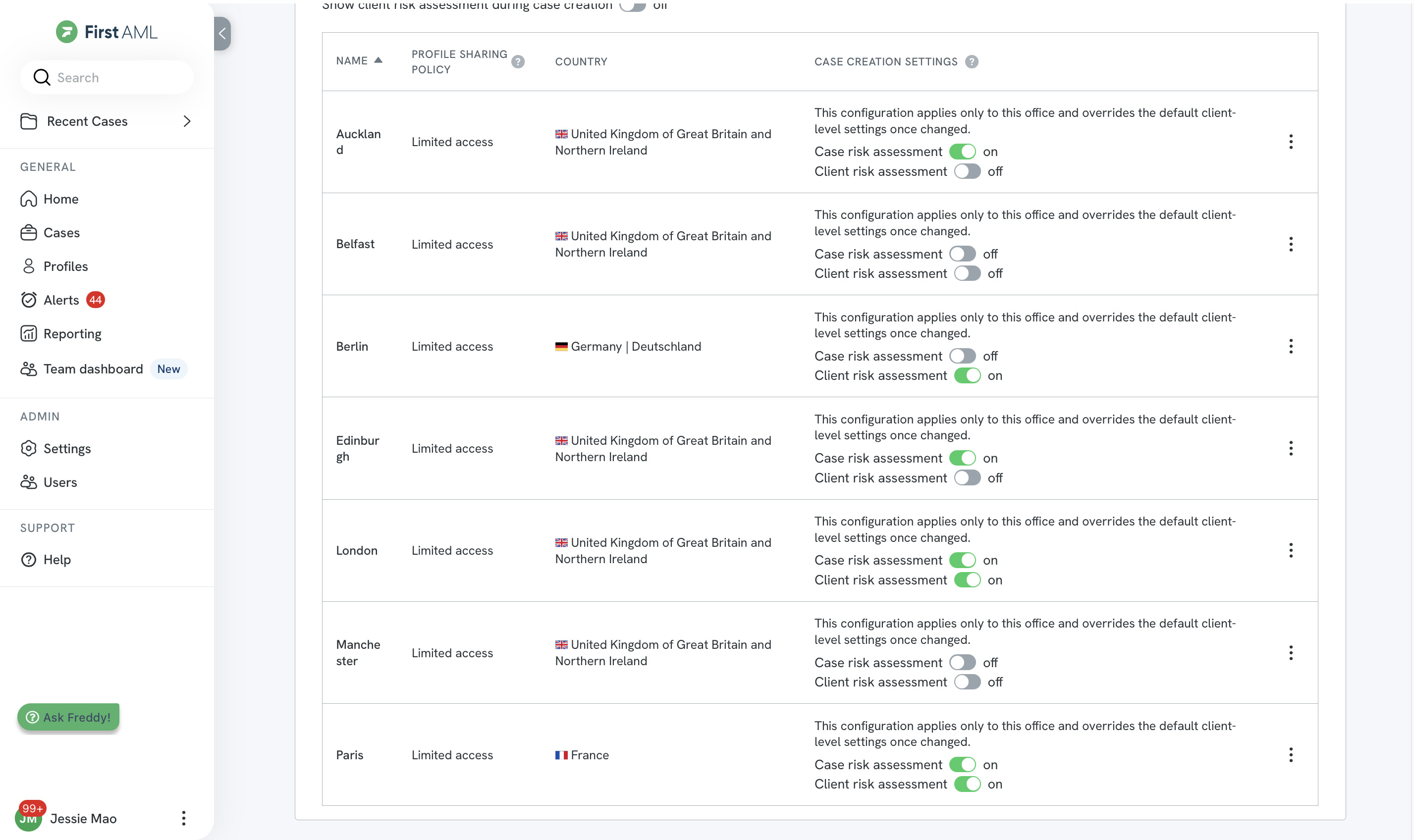
Each office’s rules apply to its own matters: review cycles, PEP treatment and country tiers. A domestic PEP is treated as lower risk in London and needs full EDD in Paris, on the same client profile, and the file shows which rule applied.
What brings a review forward?
Changes to ownership, directors or status, new information from a matter team, and any other trigger the office’s rules set. A change to the client’s risk rating sends the risk assessment back for review, and each new instruction is assessed on its own.
How is sanctions-evasion risk assessed?
The firm’s sanctions-evasion questions sit in the risk assessment and are scored with everything else. Owners and controllers are screened as well as the client, so sanctioned control shows up even when the client itself is clear.
How does First AML handle the gap between a UN designation and EU implementation?
UN lists are screened daily, so a new UN listing shows up as a hit straight away. The firm’s record of assets held and transactions attempted in that period sits on the case.
Does the €5m and €50m high-wealth trigger apply to every firm?
No. It applies to trust and company service work and to credit and financial institutions. Even then, it only applies to higher-risk relationships where both thresholds are met. A risk assessment question records assets handled and total wealth, and rules apply the required measures.
How does First AML reduce false positives without missing real matches?
The AI screening agent classifies each hit against the firm’s rules, and the firm decides which calls it can close on its own. Every call is logged. Matching sensitivity is set per office, and monitoring alerts stay open until every hit is reviewed.