Group-wide arrangements
One policy, applied locally.
One view of the client.
Group-wide oversight.
Need-to-know sharing.
AMLR requires group-wide policies, applied by each group member to its own risks, with secure, need-to-know sharing and oversight across the group. First AML sets the group standard once, lets each member add its own rules and sign-off, restricts what moves between offices and logs every decision for leadership, compliance and audit.
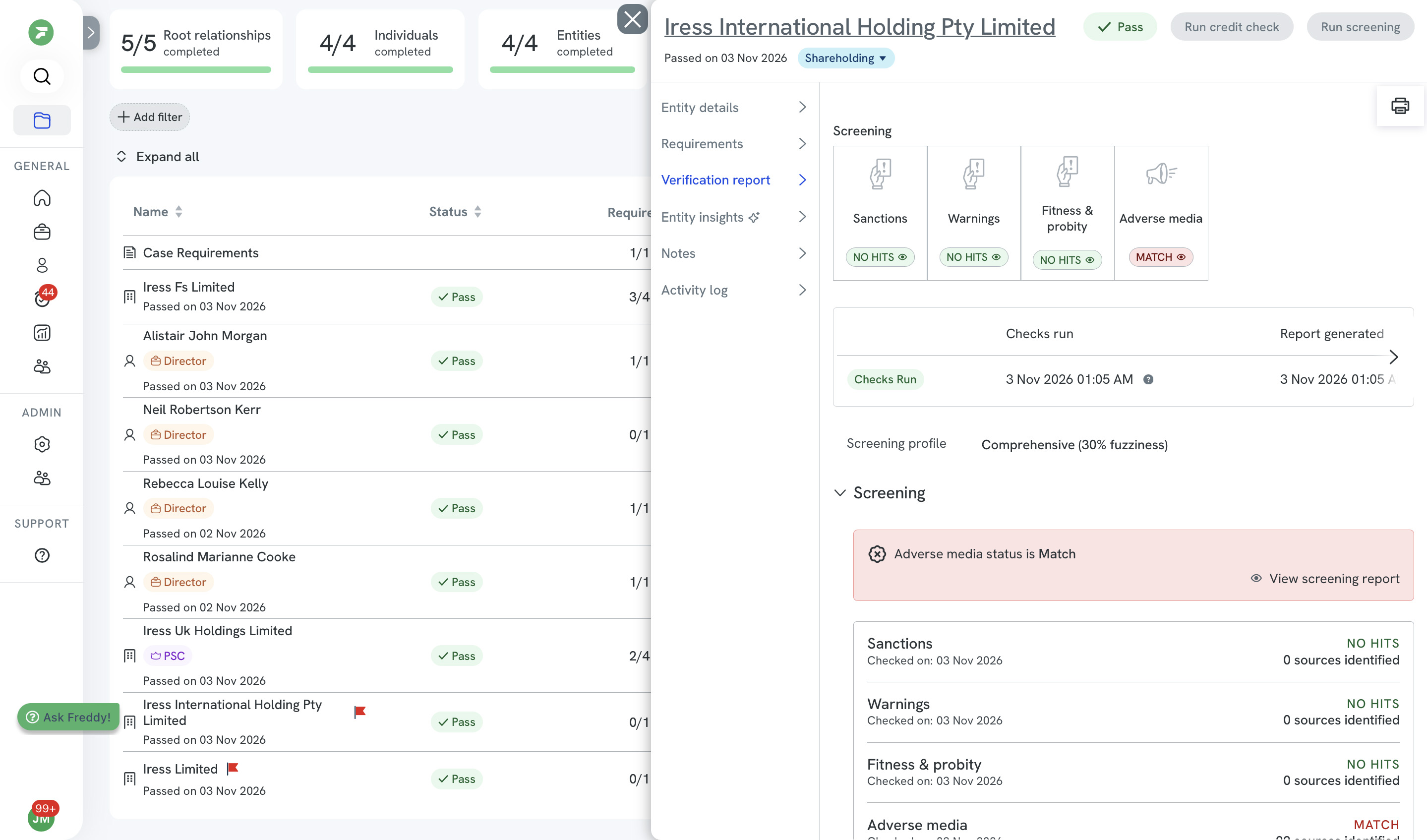
Shares client information on a need-to-know basis.
Client information moves between offices on access rights, not by email or approval request. Each office sees what its own rules require, documents a jurisdiction doesn’t need stay restricted and every change is logged against the user who made it.
Gives leadership and audit one view of the group.
Dashboards show high-risk clients, PEP and sanctions matches, overrides and open cases by office. Central compliance sees every office, local teams see their own, and auditors get read-only access to the offices they review.
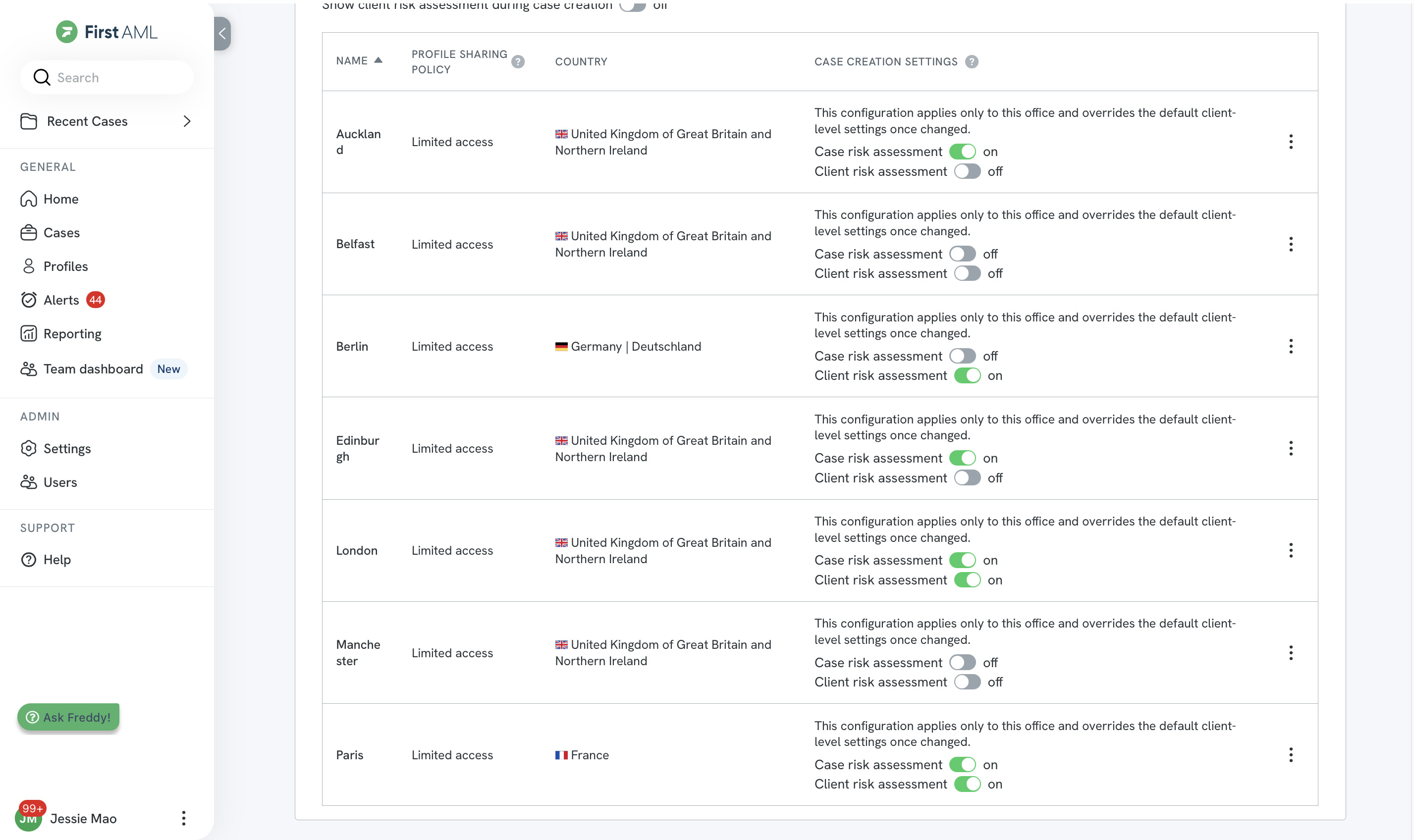
Brings networks, partnerships and brands under one structure.
Member firms, brands and entities each run as their own office, with their own branding, rules and sign-off. Central compliance oversees all of them from one place. Work outside the regulated perimeter can run in a separate office with screening only.
"I can click a button and I know how many high risk clients I’ve got, you know, that’s the sort of stuff we’re aiming for."
- Accounting firm, one country, 14 offices
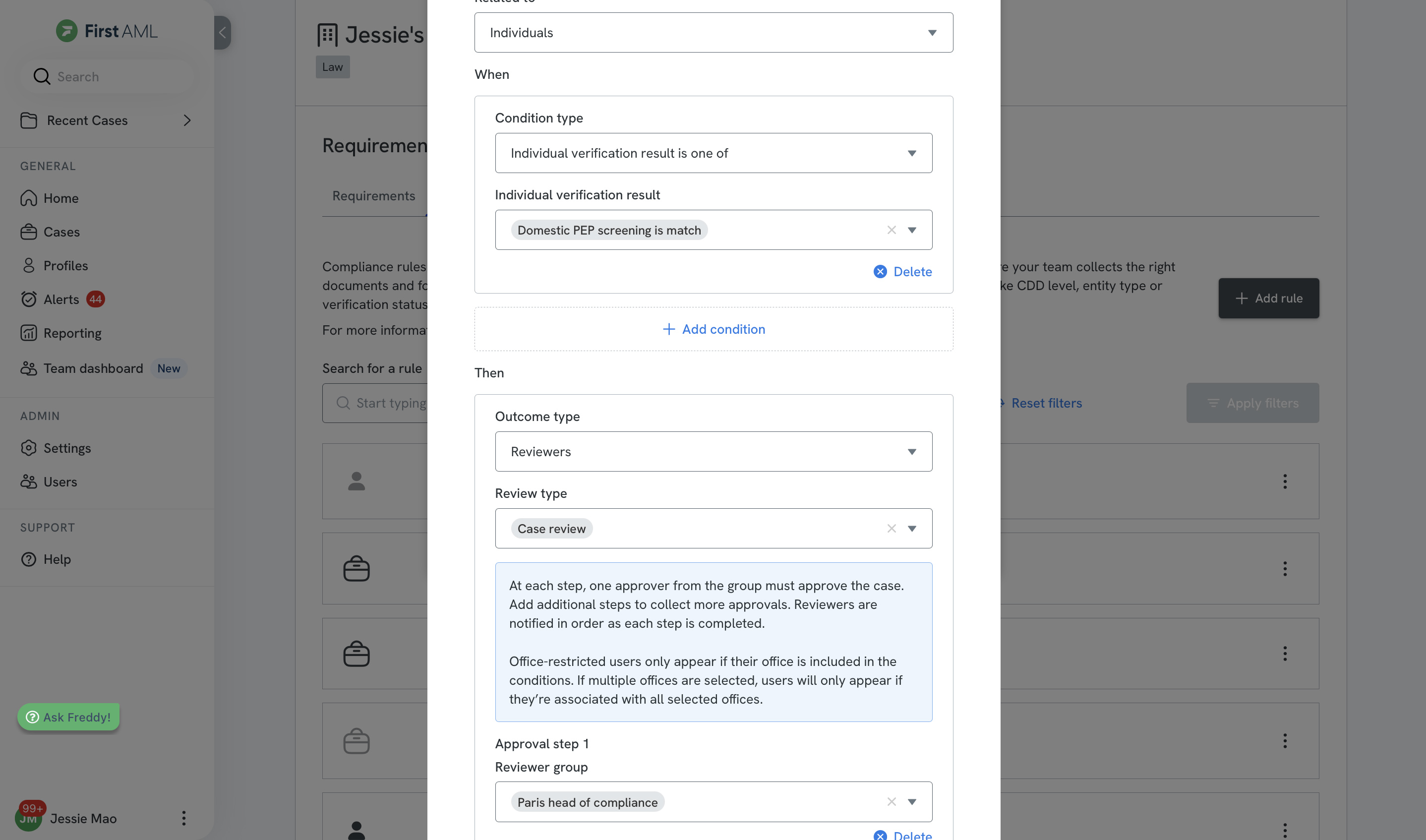
Keeps each decision with the office that owns it.
AMLR makes the parent accountable for group policy but leaves each regulated entity responsible for its own CDD and compliance decisions. First AML handles both with:
- a group policy every office inherits
- office-level approval rules, so sign-off sits with the group member that owns the decision
- global and local roles, including a local MLRO for each office
- user groups and single sign-on, so access follows the firm’s own structure
When group policy changes, central compliance updates it once and every office follows.
Secure, traceable data flow
AMLR expects groups to share more than KYC data, including the risk analysis behind each client, through a secure, real-time and traceable flow. First AML keeps each client's risk assessment answers, scoring, overrides, relevant documents and decisioning on the client record, updated as they happen and visible to offices in line with legal requirements, applicable confidentiality and privilege protections. Data is hosted in the EU under ISO 27001 and every change is logged.
Links every group member's cases to one profile.
When the same client is onboarded in several offices, the files drift apart. First AML holds one profile per client, with every related case and office linked to it. Duplicates are detected as cases are created, any office can find a client the group already holds and open requests are flagged across offices.
Unwraps international structures in full
Cross-border groups take on clients with entities in many countries, and thin data on one layer stalls the whole file. First AML unwraps structures from corporate registries and Moody’s Orbis. Registry documents stay in the local language, with key details extracted into English, so every office works from the same structure.
Frequently asked questions
How does First AML show one group policy is applied in every office, while each office keeps its own decisions?
Central compliance sets the group policy once, and every office inherits it. Each office adds its country’s rules and signs off its own cases. Every case shows the rule behind each check, who completed it and when. Central compliance can see the policy applied in every office without taking decisions over. Information is shared on access rights, within what local law allows.
Why standardise on First AML rather than add central reporting to each office’s tools?
Central reporting shows outcomes after the fact. AMLR expects evidence that the group policy was applied in practice. First AML applies the policy at the point of work in every office, so the evidence is created as each case runs, and each office keeps its own rules and sign-off.
Who supports the firm through implementation and after go-live?
People who have done AML themselves. First AML ran more than two million AML cases for firms before it built the platform, and its implementation and support teams come from compliance roles. They set the platform up to each jurisdiction’s guidance with the firm’s compliance team and stay involved after go-live.
Will sharing breach local data, secrecy or privilege rules?
Each office sees only what its own rules require. Documents a jurisdiction doesn’t need are restricted. EU and Asia-Pacific data sit in separate instances and EU data is hosted in Ireland.
What happens when local guidance or AMLA standards change what’s needed?
First AML maintains out-of-the-box regulatory rules and updates them as the standards are finalised. Central compliance decides when each update goes live and offices inherit it.
What happens where third-country law blocks compliance?
Safeguards such as independent CDD and enhanced audits are recorded as mandatory requirements for that office, so the file shows they were done. Notifying the supervisor stays with the firm.