Ownership and client structures
Every owner found.
All reasoning on file.
Every layer. Every trust.
Most structures clear automatically. The rest reach specialists with every chain calculated to AMLR’s method, the gaps flagged and the evidence attached. Each office’s threshold applies to the same structure.
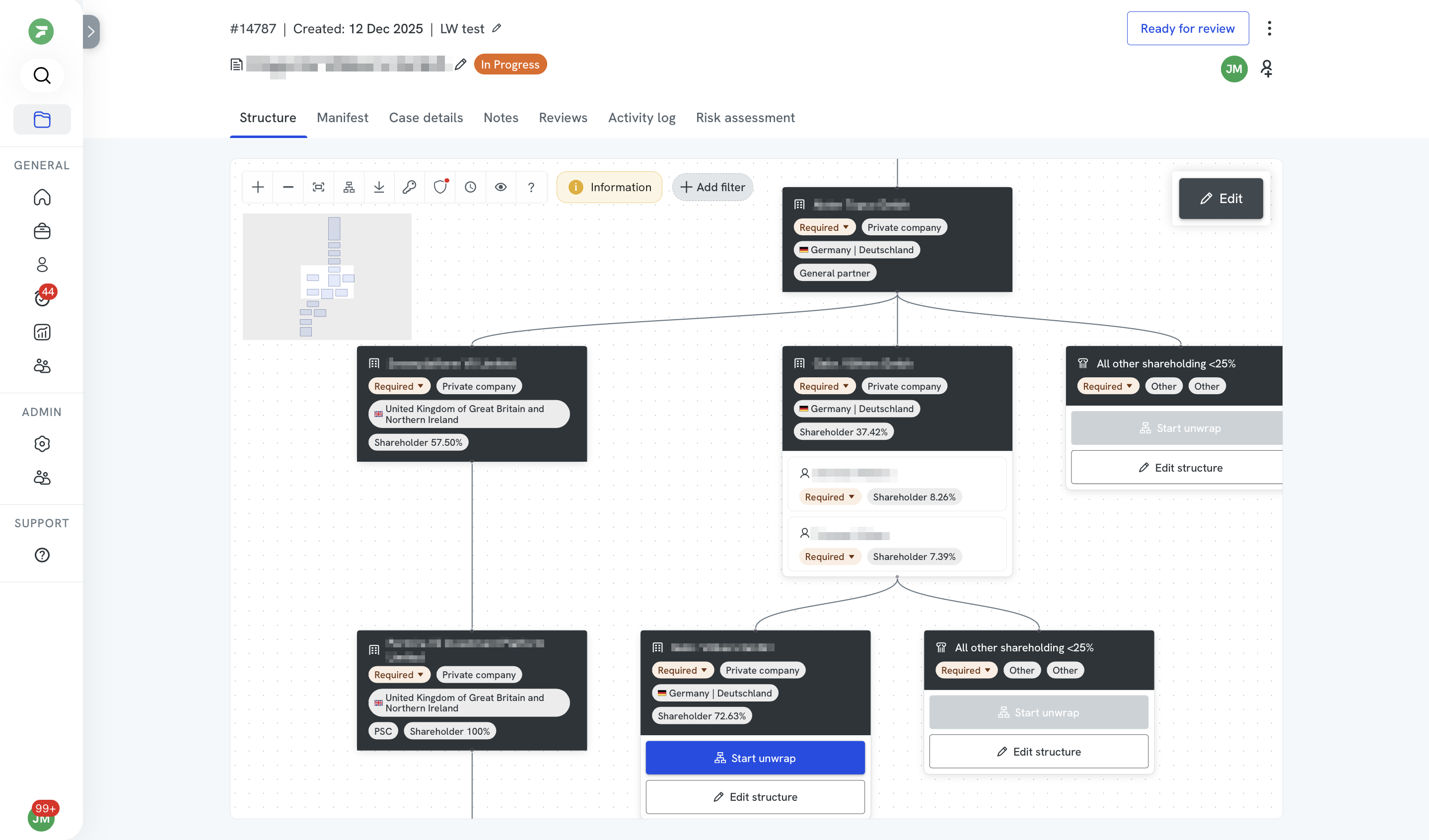
Clears the simple ones, so specialists get the hard ones.
Structures are unwrapped from corporate registries and Moody’s Orbis, and owners are marked automatically. Parties below the threshold are set aside and potential owners are flagged for review, so specialists start from a calculated structure.
Shows the reasoning, not just the chart.
Each owner carries the chain, the percentage calculated from share counts and the threshold that applied. Registry extracts, the analyst’s notes and any override with its reason sit on the same record. The register check is logged as its own step.
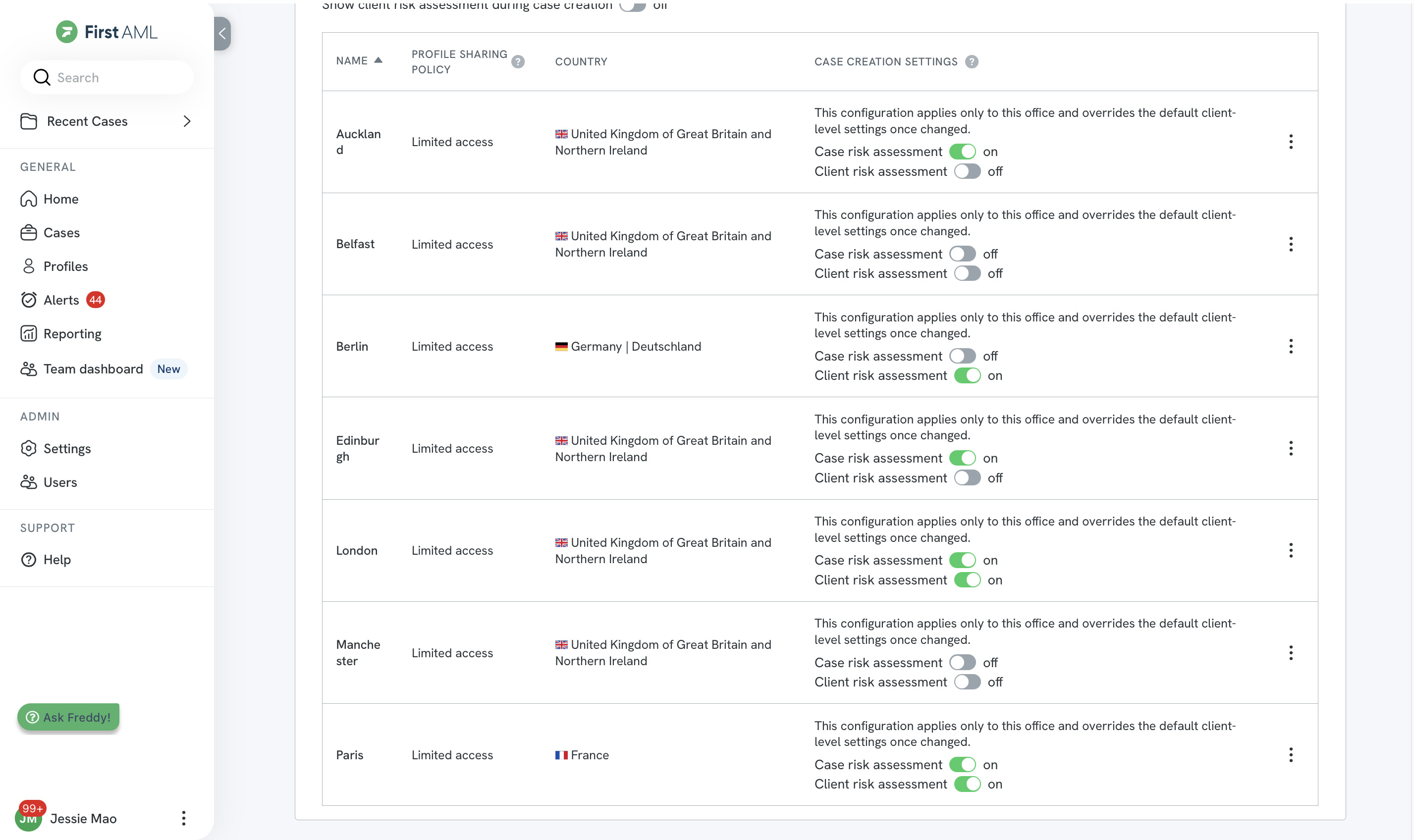
Applies each office’s threshold to the same structure.
A holding of exactly 25% makes someone a beneficial owner in Paris but not in London. Each office’s threshold applies to the same structure, so both answers are correct and the file shows which rule applied. Fallback rules and trust look-through work the same way.

Calculates ownership the way AMLR does.
AMLR prescribes how indirect ownership adds up and requires a separate test for control. First AML handles both with:
- interests multiplied through each chain and added across chains
- percentages calculated from share counts, so exactly 25% isn’t decided by rounding
- voting and economic rights calculated separately through share classes
- lower thresholds ready to switch on for any category the Commission designates
A 15% direct holding plus 60% of a holding company that owns 20% comes to 27%, so the owner is marked even though neither path reaches 25% on its own.
Registry gaps
AMLR requires the central register to be consulted, but the register doesn’t replace verification, and some jurisdictions publish no shareholders at all. First AML requests the register of members or shareholders’ agreement through the client’s secure form and reads constitutions automatically. Any link built by hand records its source.
Control and nominees
AMLR assesses control separately, including nominee arrangements, agreements and appointment rights, and a listing is no longer a blanket exemption. First AML asks for shareholders’ agreements by default, extracts nominees from documents, and records each controlling person and how they exercise control.
Trusts
AMLR names objects of a power, default takers and legal entities in trust roles. First AML reads trust deeds for every role, including classes and discretionary objects, and unwraps corporate trustees to their own owners. Each role is kept, so UK and EU rules can each apply to it.
Frequently asked questions
What happens when no owner can be found, or the owners found are in doubt?
At EU offices, the file records that no owner was identified. A rule then adds each senior managing official to be identified and verified, kept separate from the owners. The steps taken are recorded, and only the case team can see them, so nothing reaches the client that would tip them off.
How does First AML pick up ownership changes after onboarding?
Each review re-unwraps the structure from the registry and shows what changed. Changes to ownership, directors or status also trigger a review between cycles, starting with UK companies.
How are register discrepancies handled?
The register check is a required step, and differences between the register and the firm’s findings are flagged. Whether to report, and whether a professional exemption applies, stays with the MLRO. The decision is recorded on the case.
Can First AML hold a case until a non-EU company or trust is registered?
Yes, at EU offices where AMLR requires registration first. A rule makes proof of registration mandatory and the case can’t complete without it.
What happens if the Commission lowers the threshold for some structures?
Lower-threshold rules are ready to switch on for the categories the Commission designates. A high-risk client rating doesn’t trigger them on its own.
How does First AML set up ownership rules for each office before July 2027?
First AML’s implementation team, which comes from compliance roles, works with the firm’s compliance team to set thresholds, fallback rules and trust requirements for each office. Once live, the compliance team changes them without involving IT or First AML.